
How to Design a Custom Wedding Band That Fits Your Engagement Ring
Design a custom wedding band around your engagement ring. I explain shape, gaps, proportions and comfort, so you can choose a band that feels right on its own.

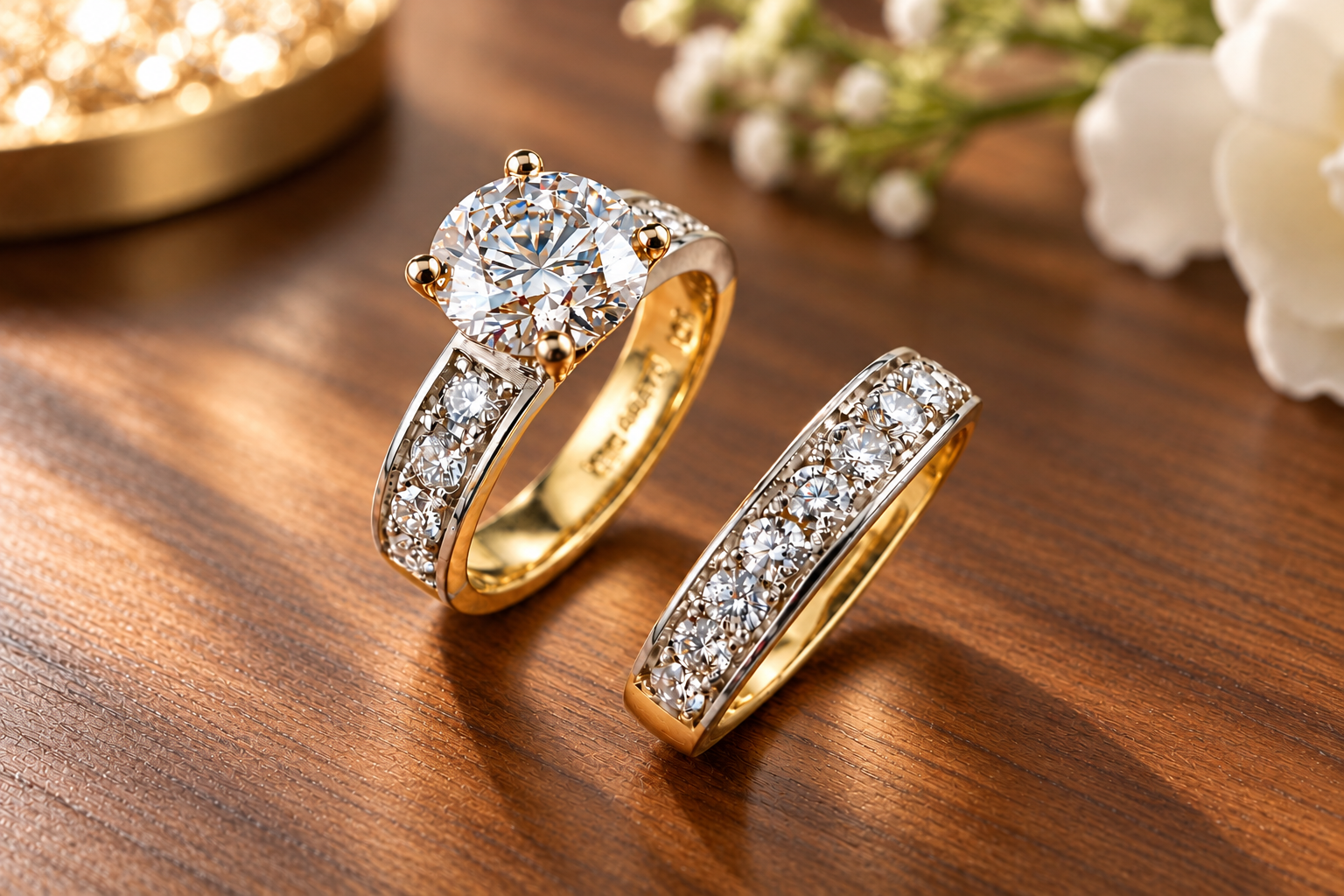
Your engagement ring is already a piece you love. Choosing a wedding band to wear beside it should feel like a natural next step, but finding the right combination involves more than simply matching the metal or choosing a band with similar diamonds.
One of the most common questions I hear is whether a wedding band needs to sit perfectly against an engagement ring. The answer is no. A beautiful wedding set is about balance, comfort and finding a combination that suits your personal style.
At my studio in Ladner Village, I help clients explore custom wedding bands that complement their engagement rings without taking away from what makes each piece special.
Decide Whether You Want a Close Fit or a Deliberate Gap
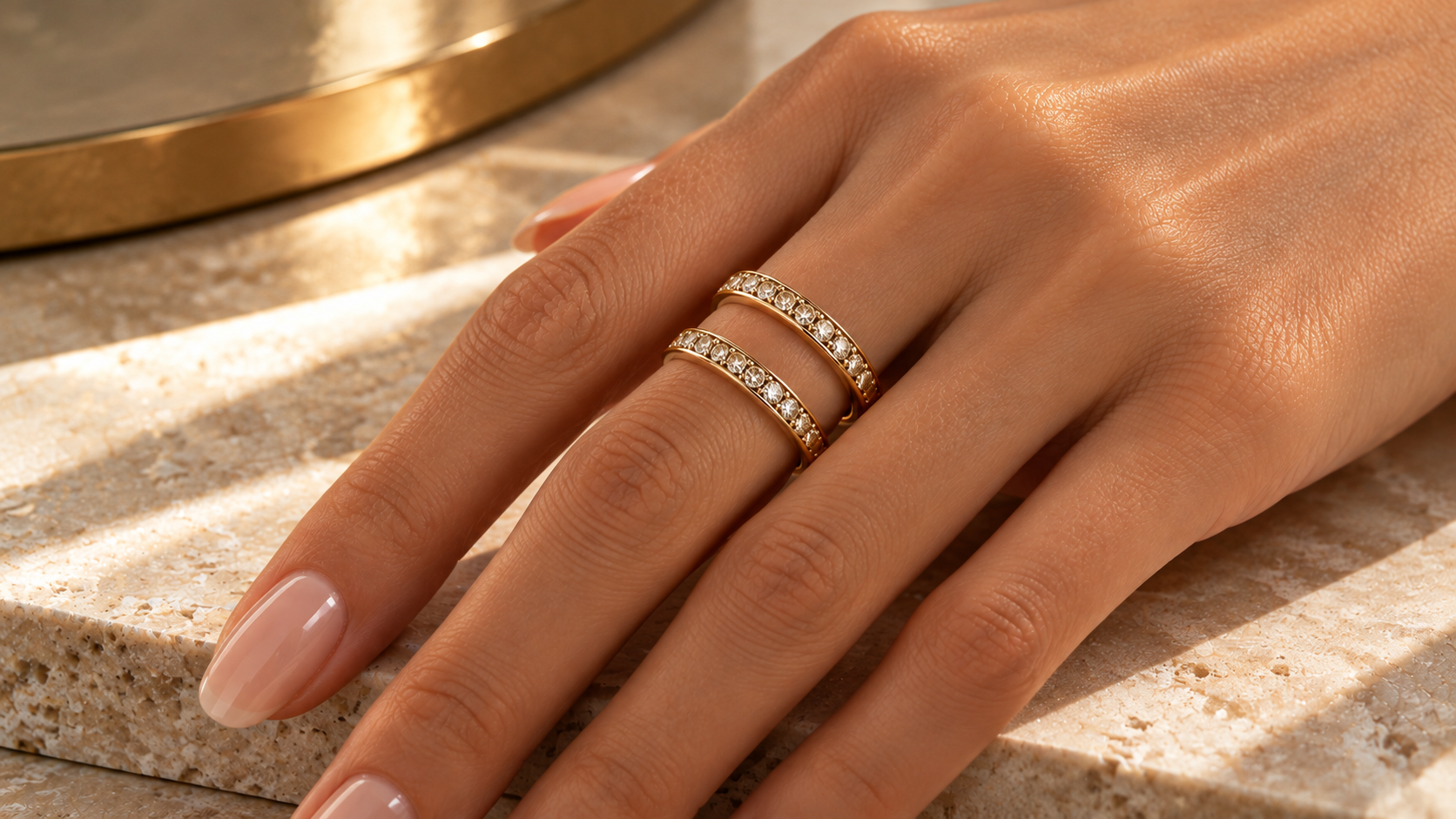
A flush fit means the two bands sit closely together without an obvious gap when viewed from above. It's one possible look, but it isn't a requirement for a beautifully designed wedding set.
If you prefer a clean, continuous outline, a close-fitting band may be important to you. If you love the individual shape of each ring, a little space can look intentional and elegant.
You don't need to change an engagement ring you love simply to eliminate every bit of space beside it.
The important consideration is how the rings sit together. They should feel comfortable and meet in sensible places without putting unnecessary pressure on the settings.
Think about your daily routine, too. If you plan to wear your wedding band on its own at work or while travelling, consider how it looks and feels without the engagement ring.
Choose the Band Shape Around the Ring You Have
There are several ways to approach the space beside an engagement ring. The best option depends on your existing setting and the look you want to achieve.
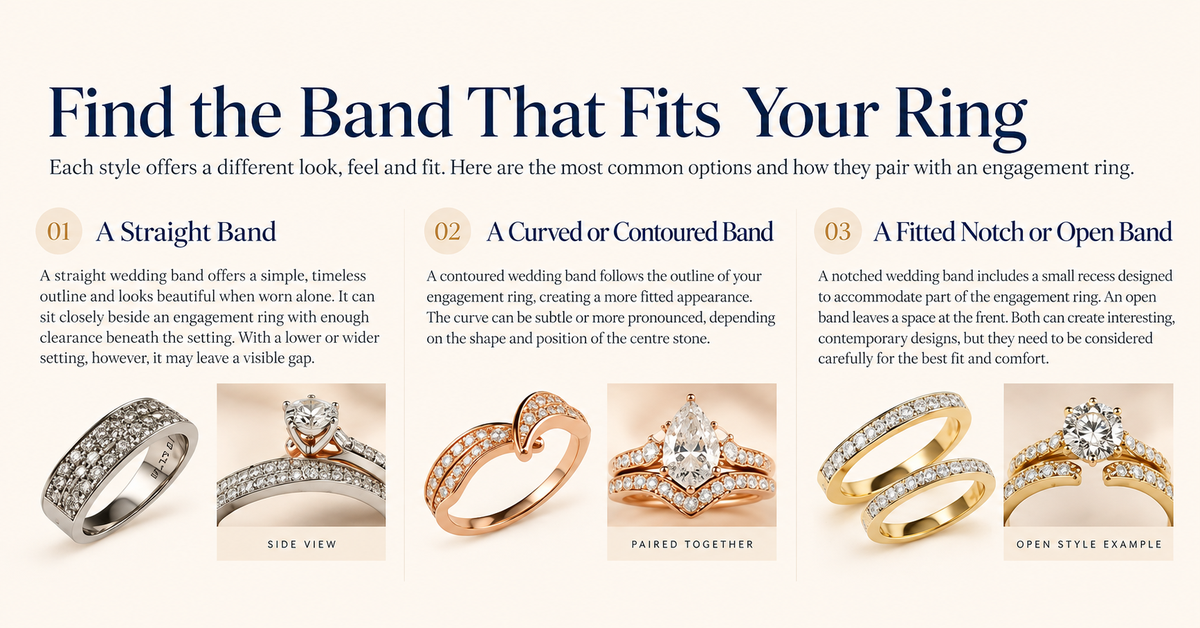
A Straight Band
A straight wedding band offers a simple, timeless outline and looks beautiful when worn alone.
It can sit closely beside an engagement ring with enough clearance beneath the setting. With a lower or wider setting, however, it may leave a visible gap.
If you love the simplicity of a straight band, don't feel that you need to choose a curved design just to eliminate that space.
A Curved or Contoured Band
A contoured wedding band follows the outline of your engagement ring, creating a more fitted appearance.
The curve can be subtle or more pronounced, depending on the shape and position of the centre stone.
For example, a pear-shaped engagement ring can look beautiful with a gently curved diamond band that frames the centre stone without competing with it.
The important detail is getting the curve right. Not every contoured band will fit every engagement ring, so the depth, width and position of the curve need careful consideration.
You can explore examples of different shapes and settings in my custom wedding band collection.
A Fitted Notch or Open Band
A notched wedding band includes a small recess designed to accommodate part of the engagement ring. An open band leaves a space at the front.
Both can create interesting, contemporary designs, but they need to be considered carefully.
Think about how the band feels on your hand, whether the open ends might catch on clothing, and whether you enjoy its appearance when worn alone.
Balance Width, Height and Sparkle
Once you've chosen the overall shape, the next step is finding the right proportions.
Band width refers to how much space the ring covers along your finger, while band height describes how far it rises above your skin.
Two bands with similar widths can feel very different depending on their settings.
A narrow engagement ring doesn't necessarily need an equally narrow wedding band. A slightly wider band can add presence, while a delicate diamond band can keep the engagement ring as the main focus.
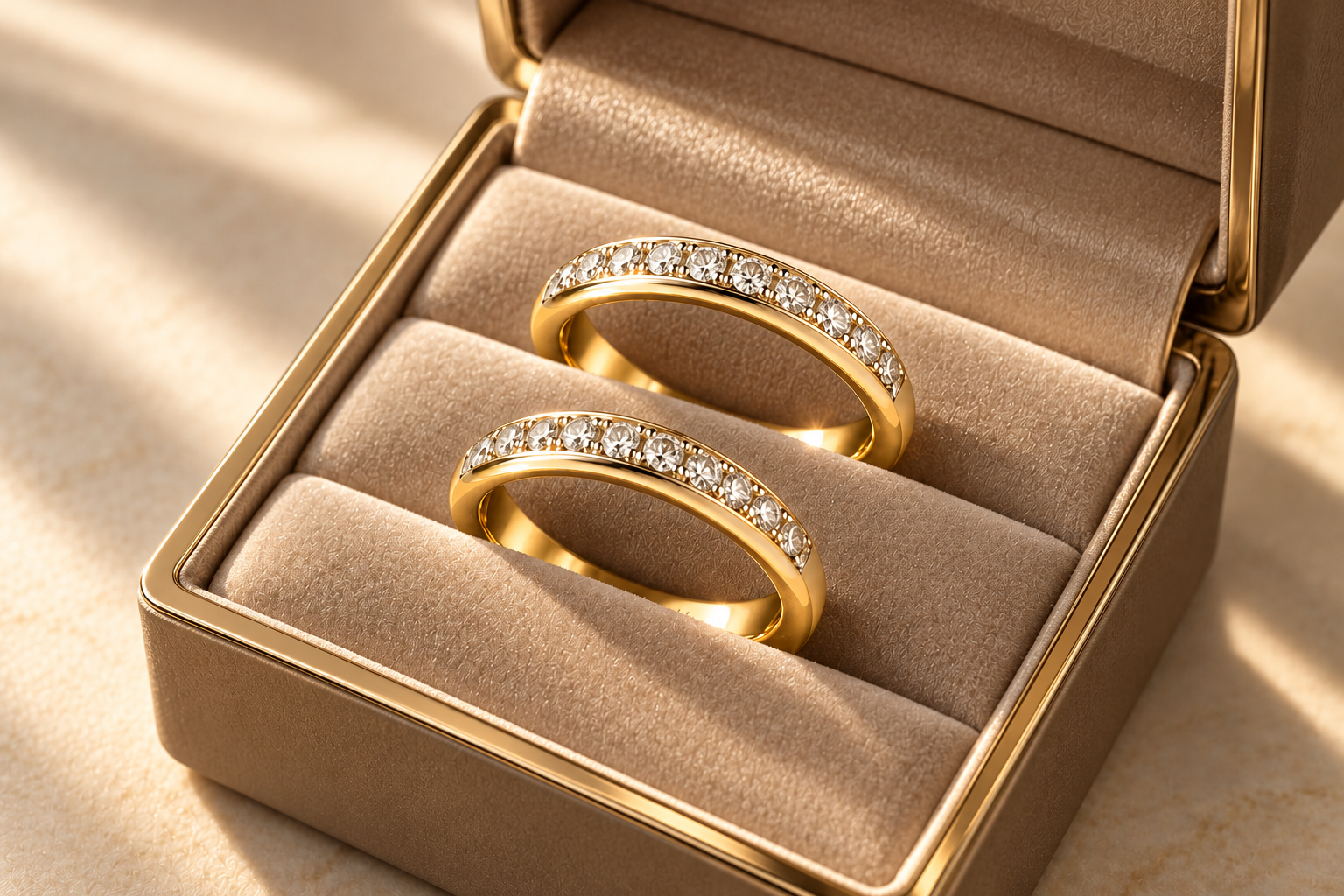
If you're considering diamonds in your wedding band, pay attention to their size, arrangement and setting.
A fine pavé band creates a delicate line of sparkle, while larger diamonds make a stronger statement. Neither is automatically better. It's about finding a combination that feels balanced and reflects your taste.
When I'm helping a client design a wedding band, I look at how the rings work together rather than trying to make every detail identical.
Sometimes the connection comes from the metal colour. Other times, it's the shape of the band or the way the diamonds complement the engagement ring.
Check Contact and Comfort Together
A wedding set needs to feel as good as it looks.
Rings naturally move as you wear them, and the areas where their edges and settings meet deserve attention. A band that looks perfectly aligned in a photograph may not be the most comfortable option for everyday wear.
The GIA's guide to ring stacking explains that wearing multiple rings together can affect their fit and increase the risk of scratches and wear, particularly when different metals are involved.
When trying on wedding bands, open and close your hand naturally. Notice whether either ring tilts, whether the edges press against your fingers, and how the combined width feels.
Sizing is another important consideration. A ring that fits comfortably on its own may feel different when worn beside a second band, particularly if the bands are wider.
In its ring-sizing guidance, the GIA notes that wider bridal sets require special consideration when determining the correct fit.
That's why I recommend considering the engagement ring and wedding band together rather than making decisions based on photographs or measurements alone.
You Can Coordinate Metals Without Matching Every Detail
Your wedding band doesn't have to be made in exactly the same colour of gold as your engagement ring.
Yellow, white and rose gold can create beautiful combinations, whether you prefer a seamless look or a subtle contrast.
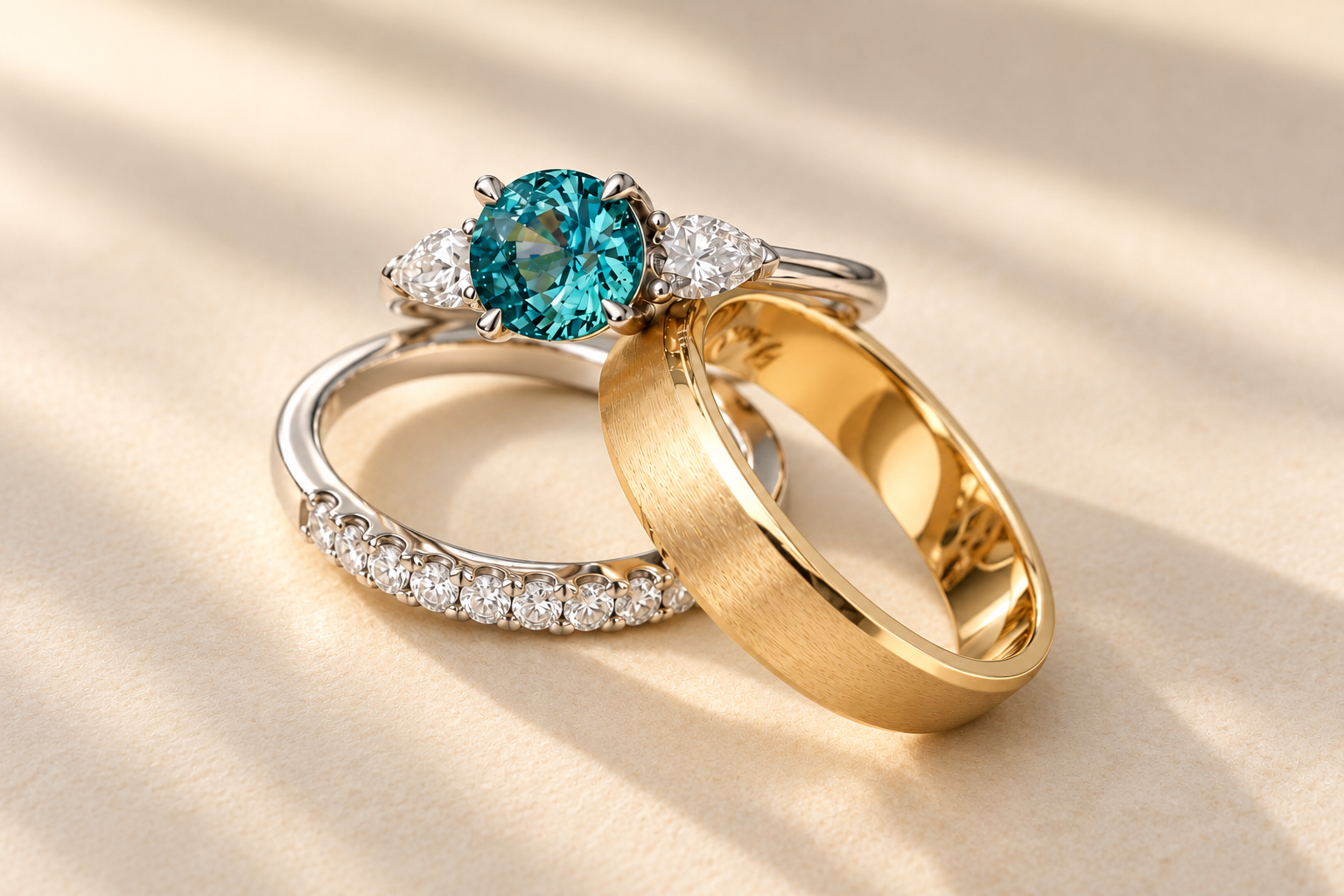
One example from my wedding band portfolio features a Montana teal sapphire and diamond ring in 19K white gold, paired with a matching white-gold diamond band and a brushed-finish 14K yellow-gold wedding band.
It's a beautiful reminder that a coordinated wedding set doesn't have to make every ring look identical.
The important thing is to consider more than colour. Different gold alloys and settings may wear differently, especially where the rings touch.
A thoughtfully designed mixed-metal wedding set can be just as elegant as a perfectly matched pair.
If you already love the metal colour of your engagement ring, use it as your starting point. Explore other combinations only if they genuinely appeal to you.
Give Your Wedding Band a Life of Its Own
Here's something I always encourage clients to consider: How will your wedding band look when you wear it on its own?
You may not always want to wear both rings together. Some days, a simple wedding band might be the more practical choice.
A straight diamond band can be a beautiful standalone piece, while a deeply contoured band will have a more distinctive shape when worn without the engagement ring.
Neither is wrong. What matters is choosing something you'll enjoy wearing.
If you're thinking about adding an anniversary band in the future, it's also worth mentioning during the design process. That way, we can consider how another ring might work with the proportions of your wedding set.
You don't need to plan an entire collection today, but a little thought about how you'll wear your jewellery can make a difference.
If you'd like something designed specifically around your engagement ring, my custom jewellery design services allow us to explore the shape, materials and details together.
A Useful Checklist Before You Choose
Before deciding on your wedding band, consider these questions:
- Do you want the wedding band to sit flush with your engagement ring, or are you comfortable with a small gap?
- Does your engagement ring have enough clearance for a straight band?
- Would a curved or contoured design better complement the centre stone?
- How do the width and height of the two rings feel together?
- Will you enjoy wearing the wedding band on its own?
- Do you prefer matching metals or a considered contrast?
- How will the settings and edges of the rings interact during everyday wear?
Bring your engagement ring and a few reference images to your consultation. You don't need to know exactly what you want.
Sometimes, seeing different shapes and proportions together is the easiest way to discover what feels right.
Frequently Asked Questions
Does my wedding band have to sit flush with my engagement ring?
No. A small gap can be a beautiful and intentional part of the design. The most important considerations are comfort, proportion and ensuring the rings don't put unnecessary pressure on each other's settings.
Will a curved wedding band fit any engagement ring?
Not necessarily. The curve needs to complement the specific shape, width and height of your engagement ring. A custom contoured band can be designed around the ring you already own.
Should my wedding band be the same width as my engagement ring?
Not at all. A wider or narrower band can create a beautiful combination. The goal is to find proportions that feel comfortable and visually balanced on your hand.
Can I wear my wedding band without my engagement ring?
Absolutely. If you plan to wear your wedding band alone regularly, consider how its shape and design look independently. This is especially important with deeply curved or contoured bands.
Can I mix metal colours in a wedding set?
Yes. Yellow, white and rose gold can work beautifully together. It's important to consider the exact alloys, settings and contact points, as different metals and designs may wear differently over time.
What should I bring to discuss a custom wedding band?
Bring your engagement ring, a few inspiration photos and an idea of how you plan to wear the band. Your wedding date, preferred style and budget are also helpful starting points.
Bring Your Engagement Ring and Your Ideas
Your wedding band should feel like a natural companion to your engagement ring, whether that means a perfectly fitted design, a delicate diamond band or a beautiful contrast in metal and shape.
At my Ladner Village studio, I can help you explore the possibilities, compare proportions and create a custom wedding band that complements the ring you already love.
Thinking about a custom wedding band? Book a private consultation and bring your engagement ring along.
Together, we can create a piece that feels beautiful beside your engagement ring and just as special when worn on its own.