

I see the same moment in my studio every late summer. A woman brings in her pearl necklace before a fall wedding, and while she hands it to me she says, “I think it needs a restring, but I’m not sure.” Then we hold it up to the light and look at the silk. Most of the time, it is not the pearls that are tired. It is the thread holding them.
I’m Trish Arato. I’ve been a custom jeweller for 25 years, and I work from my studio in Ladner Village, about a forty minute drive from Langley. Clients from Langley, Surrey, Maple Ridge, and across the Lower Mainland bring me their pearl restringing and repair, as well as redesign and transformation. Here is what I look for, what a professional restringing involves, and why your pearls are asking for attention more often than you think.

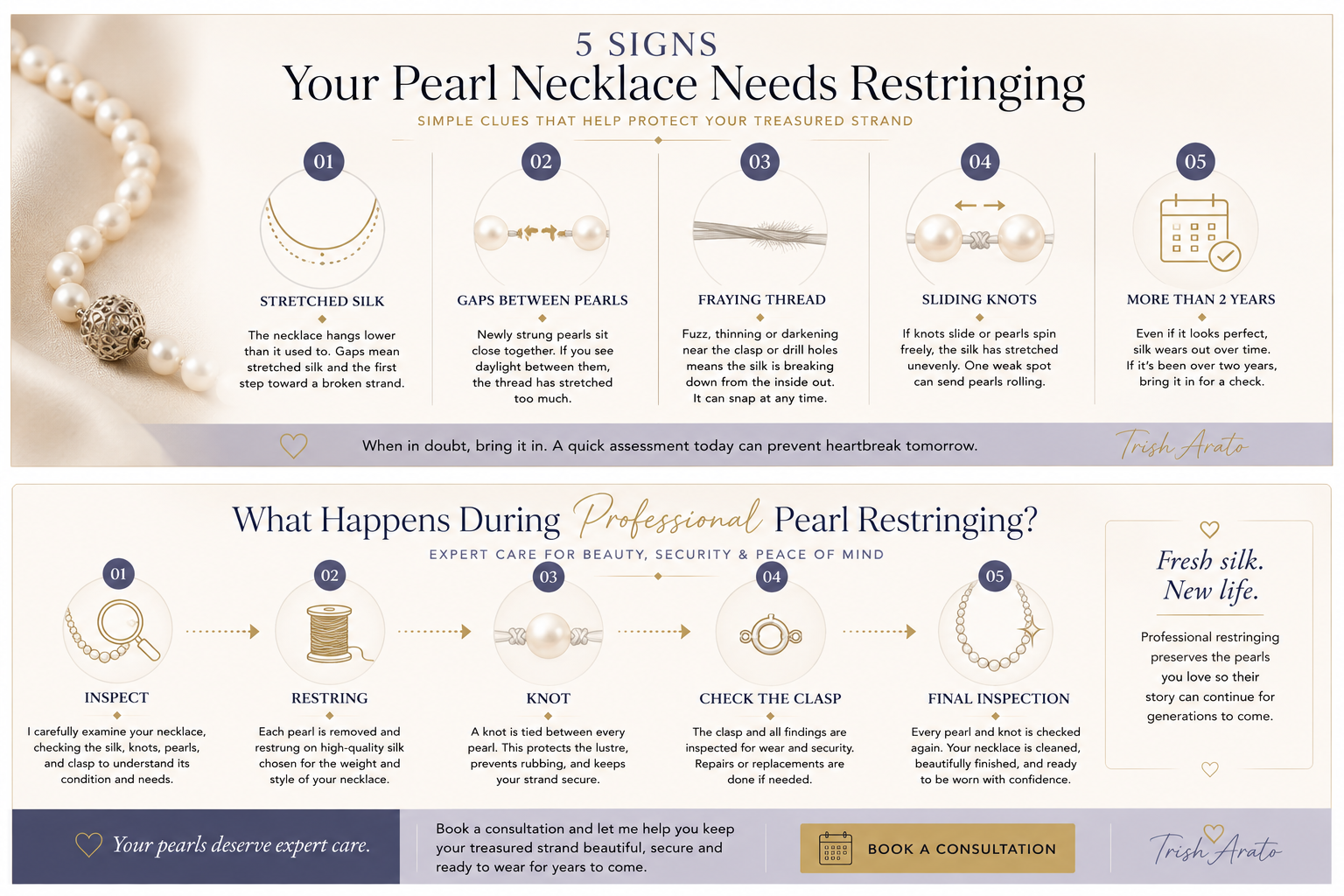
Five Signs Your Pearl Necklace Needs Restringing
Silk thread has a life span, and it is usually shorter than the pearls it holds. The pearls themselves can outlive all of us. The silk cannot. Here are the five signs I check first, and the ones you can check at home.
The Silk Has Stretched
When a pearl necklace is first strung, the silk is snug and the strand sits at a specific length. Over time, the thread gives. The necklace hangs a little lower on your collarbone than it used to. The strand that used to sit at your throat now falls an inch further down. That extra length is not a styling change. Gaps mean stretched silk, and stretched silk is the first step toward a broken strand.
You Can See Gaps Between the Pearls
Newly strung pearls sit close together, with a knot tucked between each one. When the silk stretches, the knots hold their place but the pearls drift apart. Tiny gaps open up between them. If you lay the necklace flat and see daylight between the pearls, the thread is done its job and then some. It is time.
The Thread Is Fraying
Look closely at the silk, especially near the clasp and near the drill holes. Fraying shows up as fuzz, thinning, or a dirty grey line where the thread enters each pearl. Some darkening is normal on a worn necklace. Darkening plus fuzz, plus visible fibres, means the silk is breaking down from the inside out. This is the sign that usually scares people, and it should. A strand this far gone can snap while you are wearing it.
The Knots Are Sliding
The knots between pearls should stay put. If they slide, or if a pearl spins freely and will not stay in place, the silk has stretched unevenly. That puts extra strain on the weakest section of the strand. A sliding knot is also how you lose pearls. The knot is what keeps the strand intact if the thread breaks. Once the knots stop holding, one broken spot can send pearls rolling across the floor.
It Has Been More Than Two Years
Even a necklace that looks perfect can have silk that is quietly wearing out. If you cannot remember the last time it was restrung, or if it has been more than two years, bring it in. The look of the strand tells you less than the age of the thread does.
How Often Should You Restring Pearls?
The rule I give every client: every one to two years with regular wear. If you wear your pearls weekly, lean toward every year. If they come out for weddings, holidays, and special dinners, every two years is fine.
Why the range? Silk is an organic material. It absorbs moisture, it flexes with every movement, and it rubs against the inside of each drill hole. A necklace worn once a month does far less work than one worn every Sunday.
I know that sounds frequent. Most people are surprised the first time they hear it. But here is the thing I tell them: silk is the weak link in every pearl necklace. The pearls can last generations. The thread cannot.
Restringing is not a repair of something broken. It is maintenance, like servicing a car or cleaning a fine watch.
Why Summer Humidity Is Hard on Silk
Summer is the season that ages pearl silk fastest, and the Lower Mainland knows how to do summer humidity. Summer is hardest on silk.
Humidity and perspiration get into the thread, weaken the fibres, and let it stretch. Add sunscreen, insect repellent, and the general humidity of a BC summer evening, and a strand worn through June, July, and August does the work of two years in one season.
Salt water and chlorinated pools are worse still. I always tell clients: never wear pearls swimming, even in a hot tub.
This is also why late summer is the smart time to book a restring. Fall in the Lower Mainland means weddings, anniversaries, and holiday parties. A strand restrung in late August is fresh, strong, and ready for every event from September through New Year’s. You get the peace of mind, and you avoid the rush of everyone else who waits until the week of the wedding.
What Happens During a Professional Restringing?
A professional restringing is not just new thread. It is a full service on the strand, and this is where the word professional matters.
New Silk, the Right Kind
I restring with new silk, not synthetic cord. Silk drapes the way pearls should, and it is gentle on the drill holes. The thread is chosen to match the weight of the strand, because a heavy necklace needs a heavier silk.
A Knot Between Every Pearl
Knots between each pearl are not decorative. They keep the pearls from rubbing against each other, which protects the lustre, and they stop a broken strand from turning into a shower of pearls. Every jeweller you hire should knot every single pearl. If someone offers to string your pearls without knots, walk away.
The Clasp Gets Checked
While the strand is apart, I inspect every pearl and the clasp. Clasps wear out too. A spring ring that has gone soft, or a box clasp that no longer clicks shut, will fail exactly when you are wearing the necklace at a reception.
If the clasp needs work, this is the moment for it, because the piece is already on the bench. A clasp replacement is straightforward pearl necklace repair, and it is far cheaper than losing the whole strand.
The Pearls Get Inspected
Every pearl gets a look at the drill hole and the surface while it is off the thread. I catch cracked drill holes, thin nacre, and pearls that have been glued in the past. You cannot see these things when the strand is intact.
A restringing is the one time you get a full health check on every pearl in the necklace.
Why Pearls Are Everyday Jewellery Again in 2026
Pearls had a quiet comeback and then a loud one. What started as a trend toward softer, quieter luxury has turned into something more permanent.
In 2026, I see clients wearing pearls with denim, with a T shirt and blazer, and layered with gold chains. A single strand of pearls is no longer saved for the church or the boardroom. It is the everyday necklace.
The result is simple: pearls are everyday again, and everyday wear means more strain on the silk. The same necklace that used to come out six times a year now gets worn twice a week. That changes the maintenance math.
More wear, more restringing, and I have seen the demand for pearl restringing in Langley and the Lower Mainland climb right along with the trend.
The trend has also brought more people in for custom pearl jewellery. Clients bring me inherited jewellery and ask for a tin cup style on a fine chain, or a pendant made from a single pearl that sat in a drawer for years.
Pearls are the rare gem that gets more meaningful as it is passed down, and I love helping them find a second life.
A Simple Pearl Care Guide
Good care between restrings protects both the pearls and the silk. The habits are easy.
Put your pearls on last. Perfume, hairspray, and lotion all dull lustre and age the silk. Let everything dry first.
Wipe them after every wear. A soft, dry cloth removes body oils and perspiration before they soak into the thread. This single habit does more for your necklace than anything else you can do.
Store them flat. Hang a pearl necklace and the silk stretches under its own weight. Lay the strand flat in a soft pouch, separate from harder jewellery that could scratch it.
Keep them out of bathrooms. Steam is hard on silk, and so is the heat of a curling iron. Store pearls somewhere cool and dry.
Follow those four habits and your pearls will look better, and your silk will last closer to the full two years. It is the same care advice I give every client who walks out of my studio, whether they bought the necklace from me or from a jeweller on the other side of the country.
Book a Pearl Restringing at My Studio
If any of the five warning signs sound familiar, or if you simply cannot remember the last restring, bring the strand in. The assessment is free, and you will get an honest answer, even if the answer is that the necklace is fine for another season.
Fresh silk, new life.
A restring usually takes about a week, and when you pick the necklace up, it drapes like the day you bought it. The clasp is secure, every pearl is knotted, and you can wear it without checking your collar every five minutes.
I also recommend having the strand appraised at the same time. Pearls have risen in value with the renewed interest in them, and insurance values from a decade ago may not cover a replacement today. An appraisal protects you, and it takes minutes while the piece is already with me.
Late summer is the perfect window. Weddings, fall galas, and holiday parties are all coming. Book before the rush, and your pearls will be ready for every one of them.
My studio is in Ladner Village, an easy drive from Langley, Surrey, and the rest of the Lower Mainland.
Book a pearl restringing appointment at my Ladner Village studio and let me take a closer look at your strand. I’ll assess the silk, knots, clasp, and pearls, and let you know honestly whether it is time for a restring or if your necklace can wait.
Book a consultation and bring your pearls in for a professional assessment. I’d love to help you keep a treasured strand beautiful, secure, and ready to wear for years to come.
FAQ: Pearl Restringing Questions
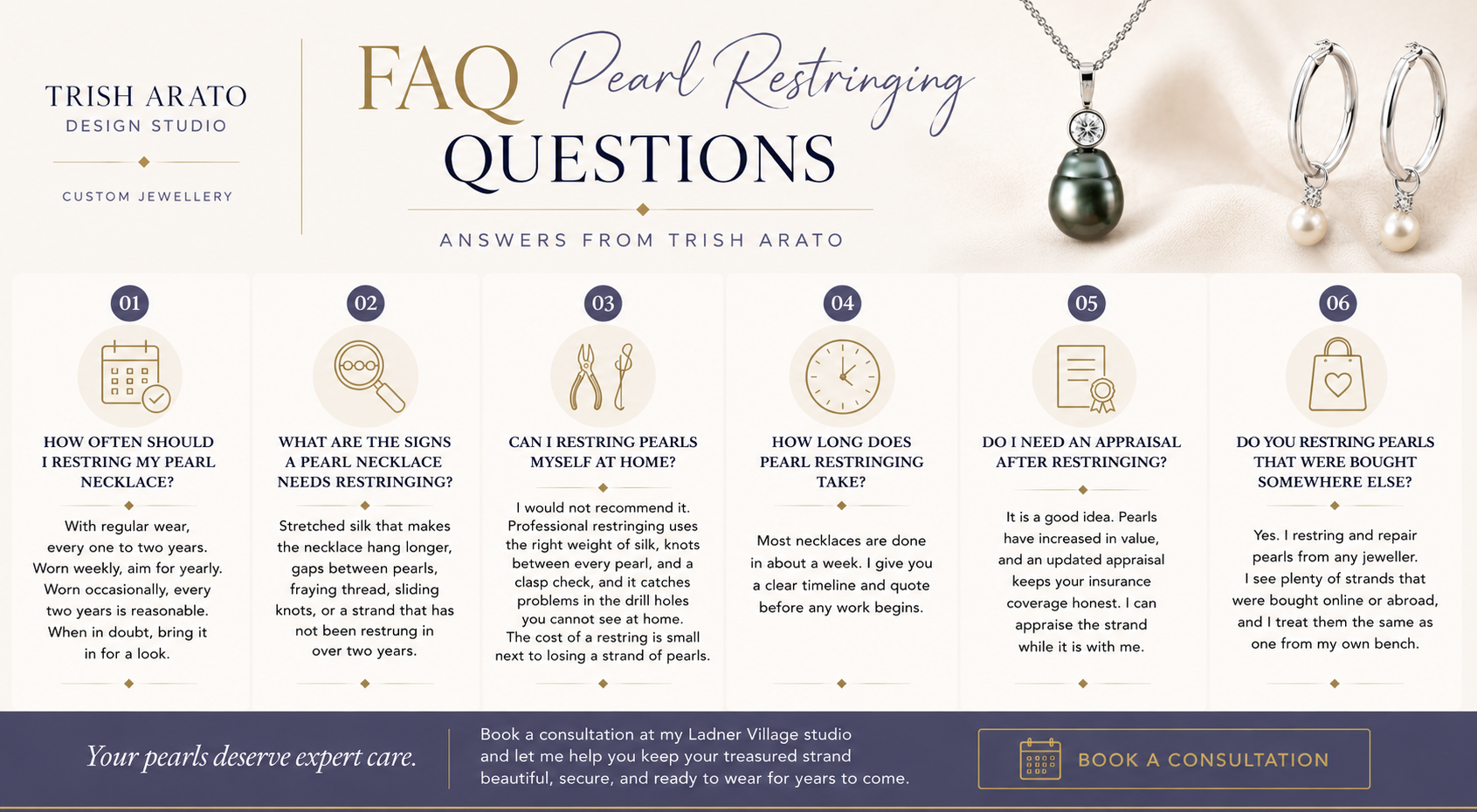
How often should I restring my pearl necklace?
With regular wear, every one to two years. Worn weekly, aim for yearly. Worn occasionally, every two years is reasonable. When in doubt, bring it in for a look.
What are the signs a pearl necklace needs restringing?
Stretched silk that makes the necklace hang longer, gaps between pearls, fraying thread, sliding knots, or a strand that has not been restrung in over two years.
Can I restring pearls myself at home?
I would not recommend it. Professional restringing uses the right weight of silk, knots between every pearl, and a clasp check, and it catches problems in the drill holes you cannot see at home. The cost of a restring is small next to losing a strand of pearls.
How long does pearl restringing take?
Most necklaces are done in about a week. I give you a clear timeline and quote before any work begins.
Do I need an appraisal after restringing?
It is a good idea. Pearls have increased in value, and an updated appraisal keeps your insurance coverage honest. I can appraise the strand while it is with me.
Do you restring pearls that were bought somewhere else?
Yes. I restring and repair pearls from any jeweller. I see plenty of strands that were bought online or abroad, and I treat them the same as one from my own bench.
Pearl Restringing Near You
Looking for pearl restringing in Langley, Surrey, Delta, or elsewhere in the Lower Mainland? I serve clients from Ladner, Delta, Tsawwassen, Richmond, Surrey, White Rock, Burnaby, New Westminster, Coquitlam, Langley, North Vancouver, West Vancouver, and throughout the Lower Mainland. If your pearls need restringing, repair, or a professional assessment, book your free consultation through my website.